

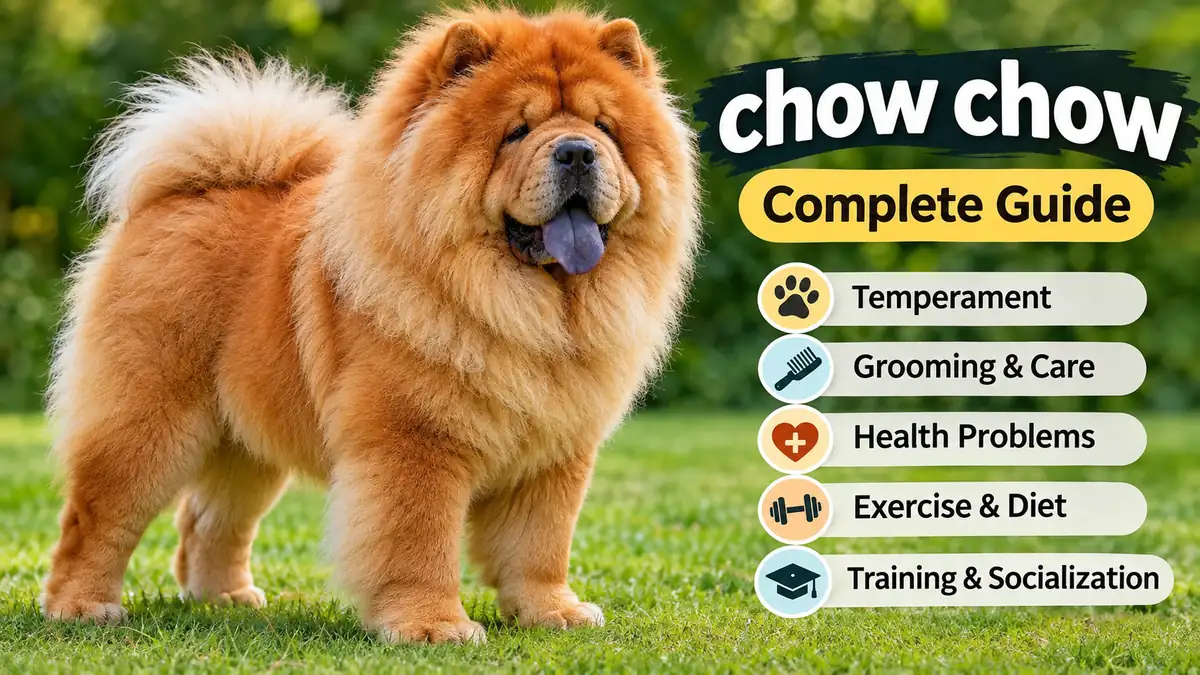
With its lion-like mane, deep-set eyes, and unmistakable blue-black tongue, the chow chow is one of the most recognizable dog breeds in the world. But behind that striking appearance is a complex personality that can surprise people unfamiliar with the breed.
The chow chow is an ancient dog breed from China, known for its dense double coat, independent temperament, and strong loyalty to familiar people. Adults typically weigh 45–70 pounds and live around 8–12 years. These dogs require regular grooming, patient training, early socialization, and careful attention to heat and joint health.
Understanding the breed’s history, behavior, and daily needs is essential for anyone interested in these distinctive dogs.
What Is a chow chow?
The chow chow is a medium-sized, sturdy dog breed originally developed in China. Its compact body, broad skull, small upright ears, and abundant coat give it an appearance often compared to a lion or teddy bear.
Unlike many breeds developed primarily for close cooperation with humans, the chow chow tends to be reserved and self-reliant. It may form a strong attachment to its household while showing little interest in unfamiliar people.
The American Kennel Club (AKC) classifies the breed in the Non-Sporting Group.
Key Breed Characteristics
| Characteristic | Typical Description |
|---|---|
| Origin | China |
| Breed group | Non-Sporting (AKC) |
| Height | 17–20 inches |
| Weight | 45–70 pounds |
| Lifespan | Approximately 8–12 years |
| Coat | Dense double coat; rough or smooth |
| Colors | Red, black, blue, cinnamon, cream |
| Temperament | Independent, loyal, reserved, dignified |
| Exercise | Moderate daily activity |
| Grooming | Regular brushing; more for rough coats |
| Trainability | Intelligent but independent |
| Climate tolerance | Sensitive to excessive heat |
These are general breed characteristics rather than guarantees. Individual dogs can differ considerably in size, energy, sociability, and behavior.
History and Origin of the chow chow
The chow chow has a long history associated with northern China, where its ancestors served several practical purposes.
Historical accounts describe chow-type dogs being used for guarding, hunting, and other working roles. Their thick coats offered protection in cold climates, while their sturdy bodies and watchful nature suited demanding environments.
Ancient Chinese Heritage
The breed is sometimes associated with the Han dynasty, which lasted from 206 BCE to 220 CE. Artwork and historical descriptions from ancient China show dogs with some features resembling modern chow chows.
However, identifying the precise ancestry of today’s breed from ancient representations is difficult.
Genetic research places the chow chow among dog breeds with relatively ancient lineages, although this does not mean the modern breed has remained unchanged for thousands of years.
How the Breed Reached Western Countries
Chow chows became increasingly known in Britain during the nineteenth century.
Their unusual appearance attracted attention from dog enthusiasts, and selective breeding gradually established recognizable breed standards.
The American Kennel Club officially recognized the chow chow in 1903.
Today, the breed is maintained by enthusiasts worldwide, with organizations such as The Chow Chow Club, Inc. promoting breed education and responsible ownership.
Where Does the Name Come From?
The precise origin of the name chow chow remains uncertain.
One frequently repeated explanation connects it with historical English-language trading terminology for assorted goods arriving from Asia. However, this interpretation should not be treated as conclusively established.
The breed’s Chinese name, Songshi Quan, is commonly translated as “puffy-lion dog,” reflecting its characteristic appearance.
chow chow Appearance, Size, and Coat Types
Chow Chow: Razza – Descrizione – Carattere – Cuccioli – Foto – Prezzo
Perros chow chow blanco – Imagui
Black Chinese dog Chow Chow with blue tongue against red background
10
The chow chow has a distinctive combination of physical features that separates it from most other breeds.
Its body is compact and muscular, with a broad chest, relatively straight hind legs, and a high-set tail carried over the back.
How Big Does a chow chow Get?
Most adult chow chows stand approximately 17–20 inches tall at the shoulder.
Typical adult weights range from 45 to 70 pounds, although some individuals fall outside this range.
Males are often larger and heavier than females, but sex alone does not determine adult size.
Puppies grow rapidly during their first year, with many approaching their adult height by around 12 months. Physical maturity and body condition can continue developing afterward.
Rough Coat vs. Smooth Coat
There are two recognized coat varieties.
Rough-coated chow chow: This variety has a thick, abundant outer coat with a soft, woolly undercoat. The fur around the neck and shoulders creates the famous lion-like ruff.
Smooth-coated chow chow: This variety has a shorter, dense outer coat with a plush appearance. It retains the breed’s double-coat structure but generally requires less intensive brushing.
Both varieties shed and need consistent coat maintenance.
Recognized chow chow Colors
The breed is commonly seen in five recognized color categories:
- Red, ranging from light golden shades to deep reddish brown
- Black, sometimes showing lighter shading in the coat
- Blue, a diluted dark gray coloration
- Cinnamon, ranging from pale fawn to deeper warm tones
- Cream, ranging from pale ivory to light biscuit shades
Color intensity and shading vary between individual dogs.
Coat color does not reliably predict temperament, intelligence, or overall health.
Why Does a chow chow Have a Blue-Black Tongue?
One of the breed’s defining features is its blue-black tongue.
This coloration results from pigmentation involving melanin. Chow chow puppies are generally born with pink tongues that gradually develop darker pigmentation as they mature.
The Chinese Shar-Pei is another breed well known for a heavily pigmented tongue.
A naturally blue-black tongue in a healthy chow chow is different from a tongue suddenly turning blue because of inadequate oxygen.
Important: Sudden blue or gray discoloration of the tongue or gums, especially with breathing difficulty, is a veterinary emergency.
Other Distinctive Physical Features
The breed also has small triangular ears, a relatively short muzzle, deep-set eyes, and a characteristic stiff-looking gait.
Its hind-leg structure contributes to a shorter stride than that of many similarly sized dogs.
Excessively exaggerated features, including heavy facial folds or restricted movement, should not be considered desirable simply because they make a dog look more distinctive.
chow chow Temperament and Personality
The chow chow temperament is often described as dignified, independent, loyal, and reserved.
These dogs are not typically as openly affectionate with strangers as breeds developed for highly sociable companionship.
However, reserved behavior does not automatically mean aggression.
Are chow chows Friendly?
Many chow chows develop close relationships with their families while remaining cautious around unfamiliar people.
Some enjoy quiet companionship and prefer staying near their owners without constantly seeking physical contact.
Others are more affectionate and interactive.
Individual personality depends on genetics, early experiences, socialization, health, and the dog’s environment.
A well-adjusted dog should be able to remain calm around unfamiliar people without being forced into unwanted interactions.
Are chow chows Aggressive?
A chow chow is not automatically aggressive because of its breed.
However, its guarding tendencies, independence, and sensitivity to handling can make careful socialization and training especially important.
Fear, pain, poor social experiences, and inappropriate handling can increase the risk of defensive behavior in any dog.
Warning signs may include:
- Stiff body posture
- Persistent staring
- Growling or showing teeth
- Freezing when approached
- Guarding food, toys, or resting areas
- Snapping when uncomfortable
Growling is communication, not simply disobedience. Punishing it may suppress a warning without resolving the underlying discomfort.
If aggression or repeated defensive behavior occurs, a veterinarian and qualified reward-based behavior professional can help identify contributing factors.
Are chow chows Good Family Dogs?
Chow chows can live successfully in families that understand their temperament and respect their boundaries.
They may be less suitable for households expecting a dog that enthusiastically welcomes frequent hugging, rough play, or constant interaction.
Children should be taught not to disturb dogs while sleeping, eating, or resting.
Adult supervision is essential whenever young children interact with dogs, regardless of breed.
Do chow chows Get Along With Other Dogs?
Some chow chows coexist peacefully with other dogs, particularly when introduced carefully and given positive experiences from an early age.
Others may be selective about canine companions or uncomfortable with unfamiliar dogs approaching too closely.
Compatibility depends on the individuals involved rather than breed alone.
Controlled introductions, sufficient personal space, and careful supervision help reduce conflict.
Training and Socializing a chow chow
Training a chow chow requires patience, consistency, and an understanding of independent canine behavior.
The breed can learn commands and routines effectively, but it may not respond with the eager repetition seen in some working and sporting breeds.
Are chow chows Easy to Train?
They are generally considered moderately challenging to train, especially for inexperienced owners.
Their independence can make repetitive drills less engaging.
Short sessions with meaningful rewards are often more productive than prolonged obedience exercises.
Useful rewards include food, toys, praise, and opportunities to explore, depending on what motivates the individual dog.
Harsh corrections, intimidation, and dominance-based handling can increase fear and damage trust.
Early Puppy Socialization
The early socialization period is especially important for developing comfortable responses to everyday experiences.
Puppies benefit from positive exposure to different people, surfaces, sounds, environments, and appropriately matched dogs.
The objective is not to make a puppy interact with everyone.
Instead, socialization should help the puppy learn that unfamiliar experiences are manageable and safe.
A practical approach includes:
- Introduce new experiences at a comfortable distance.
- Reward calm observation and relaxed behavior.
- Allow the puppy to approach voluntarily when appropriate.
- End interactions before the puppy becomes overwhelmed.
- Gradually increase difficulty as confidence develops.
Veterinarians can advise on safe socialization opportunities while vaccinations are being completed.
Essential Commands and Everyday Skills
Basic training should focus on skills that improve safety and cooperation.
These include responding to a name, coming when called, walking calmly on a leash, settling on a mat, and accepting gentle handling.
Recall deserves particular attention because independent dogs may become absorbed in environmental distractions.
Until recall is reliable, secure fencing and leash use are safer than unrestricted outdoor access.
Preventing Resource Guarding
Some dogs become defensive when people approach food, toys, or valued resting areas.
Avoid repeatedly taking possessions away to establish control.
Instead, teach positive associations with human approaches and use reward-based exchanges when appropriate.
Established resource guarding should be addressed with professional guidance rather than confrontational techniques.
Grooming and Daily Care Requirements
How to Groom a Chow Chow: Step-by-Step Guide | Hero Pet Health
The chow chow’s dense double coat requires ongoing maintenance.
Neglecting grooming can lead to tangles, compacted undercoat, skin irritation, and discomfort.
How Often Should You Brush a chow chow?
Rough-coated dogs may need brushing several times per week, with more frequent attention during heavy seasonal shedding.
Smooth-coated dogs often need less intensive maintenance, although regular brushing remains beneficial.
A grooming routine should include checking behind the ears, around the collar, under the legs, and near the tail, where tangles can develop.
A slicker brush, suitable comb, and undercoat tools may be useful when used gently and correctly.
Do chow chows Shed a Lot?
Yes. Both coat varieties shed, and many experience heavier seasonal shedding as their undercoat changes.
Shedding patterns vary with climate, indoor living conditions, and individual coat characteristics.
Regular brushing helps remove loose fur before it accumulates around the home.
Should You Shave a chow chow?
Routine shaving is generally discouraged.
The double coat contributes to insulation and protection from environmental exposure. Removing it can increase vulnerability to sunburn and may affect coat regrowth.
However, the coat does not make the breed immune to overheating.
Dogs with severe matting or medical needs may require clipping under professional guidance.
Bathing, Nails, Ears, and Teeth
Bathing frequency depends on the dog’s coat condition and lifestyle. A bath every several weeks or as needed may be appropriate, provided the coat is thoroughly rinsed and dried.
Nails should be checked regularly and trimmed before they interfere with normal walking.
Ear care should focus on monitoring for redness, odor, discharge, or discomfort rather than unnecessary cleaning.
Daily toothbrushing with dog-safe toothpaste is ideal for reducing plaque accumulation and supporting oral health.
Exercise, Diet, and Weight Management
Despite its substantial appearance, the chow chow is not typically an endurance-focused breed.
Most adults benefit from moderate exercise, mental stimulation, and predictable daily routines.
How Much Exercise Does a chow chow Need?
Many healthy adult chow chows do well with roughly 30–60 minutes of daily activity, divided into comfortable sessions.
This is a general starting point rather than a strict requirement.
Age, health, temperature, fitness, and individual energy levels should determine the actual routine.
Activities may include relaxed walks, scent games, food puzzles, and short training sessions.
Strenuous activity in hot weather should be avoided.
Can a chow chow Live in an Apartment?
Yes, some chow chows adapt well to apartment living.
Their relatively moderate activity needs can make indoor life manageable when exercise and enrichment are provided.
However, barking, sensitivity to unfamiliar visitors, grooming demands, and access to cool environments all deserve consideration.
A secure outdoor area can be useful but is not a substitute for daily interaction and exercise.
Feeding and Nutrition
A chow chow should receive a complete and balanced diet appropriate for its life stage.
Puppies, adults, seniors, and dogs with medical conditions may have different nutritional requirements.
Portion sizes depend on calorie density, body weight, activity level, and body condition.
Rather than relying on a fixed feeding quantity for every dog, owners should monitor body condition and adjust portions with veterinary guidance.
Preventing Obesity
Excess body weight increases stress on joints and may worsen mobility problems.
A healthy body condition generally allows the ribs to be felt beneath a light fat covering, with a visible waist when viewed from above.
Treats should account for only a small proportion of daily calories.
Regular weigh-ins can help detect gradual weight gain before it becomes significant.
chow chow Health Problems and Lifespan
Chow chows can live healthy lives, but the breed has several recognized health concerns.
Awareness of these conditions helps owners recognize symptoms early and make informed decisions about veterinary care.
Hip Dysplasia
Hip dysplasia occurs when the hip joint develops abnormally, potentially causing joint instability and degenerative arthritis.
Signs may include stiffness, difficulty rising, reluctance to jump, and changes in gait.
Not every affected dog shows obvious symptoms.
Maintaining an appropriate body weight and following veterinary recommendations can help manage joint stress.
Elbow Dysplasia and Joint Disease
Elbow dysplasia describes developmental abnormalities affecting the elbow joint.
Affected dogs may show forelimb lameness, stiffness after rest, or reduced willingness to exercise.
Veterinary examination and imaging may be needed to establish the diagnosis.
Entropion and Eye Problems
Entropion occurs when an eyelid rolls inward, allowing eyelashes or surrounding hair to rub against the eye.
This can cause pain, excessive tearing, squinting, and corneal damage.
Chow chows may also experience other eye disorders, making regular eye examinations important.
Persistent squinting or eye discomfort requires prompt veterinary attention.
Hypothyroidism
Hypothyroidism occurs when the thyroid gland produces insufficient thyroid hormones.
Possible signs include unexplained weight gain, lethargy, coat thinning, and skin changes.
Diagnosis requires veterinary assessment and appropriate laboratory testing.
When confirmed, the condition is commonly managed with prescribed thyroid hormone replacement.
Heat Intolerance and Breathing Difficulties
The breed’s heavy coat and relatively short muzzle can make hot weather particularly challenging.
Some individuals may also have conformational breathing difficulties, especially when facial features are exaggerated.
Heatstroke is a medical emergency.
Warning signs include severe panting, weakness, collapse, confusion, vomiting, or difficulty breathing.
Move an overheated dog to a cooler environment, begin cooling with cool water and airflow, and seek emergency veterinary care immediately.
Do not delay treatment while waiting for symptoms to resolve.
Gastric Dilatation-Volvulus
Gastric dilatation-volvulus, commonly called GDV or bloat, occurs when the stomach becomes distended and twists.
It is a life-threatening emergency that can affect deep-chested dogs.
Signs may include repeated unsuccessful attempts to vomit, abdominal enlargement, restlessness, and sudden weakness.
Immediate emergency veterinary treatment is essential.
How Long Do chow chows Live?
The commonly quoted chow chow lifespan is approximately 8–12 years, although some individuals live longer.
Lifespan estimates vary between studies and populations.
Genetics, body condition, preventive veterinary care, nutrition, and management of chronic disease can all influence longevity.
Regular veterinary examinations become especially valuable as dogs age.
Recommended Health Screening
Responsible breed health assessment may include hip and elbow evaluations, eye examinations, and thyroid testing.
The Orthopedic Foundation for Animals (OFA) and the Canine Health Information Center (CHIC) provide information about breed-specific screening recommendations.
Health testing reduces uncertainty but cannot guarantee that an individual dog will never develop disease.
chow chow Puppies and Growth Stages
Chow chow puppies are usually fluffy, curious, and playful, but their early development requires particular attention.
Their adult temperament does not appear fully formed at birth. Experiences during puppyhood can influence how they respond to people, animals, handling, and unfamiliar situations later in life.
Newborn to Eight Weeks
During their earliest weeks, puppies depend heavily on their mother and littermates.
They gradually develop their senses, coordination, and early social behaviors.
Interactions with littermates help puppies practice communication and learn responses to other dogs.
Puppies should generally remain with their mother and litter until at least eight weeks of age, unless veterinary or welfare circumstances require otherwise.
Eight Weeks to Six Months
This period is important for household training, socialization, and developing positive associations with grooming.
Puppies can begin learning simple cues, accepting gentle brushing, and becoming comfortable with short periods of separation.
House-training should involve frequent opportunities to eliminate outdoors, predictable routines, and immediate rewards for success.
Accidents should be managed calmly rather than punished.
Six Months to Adulthood
Adolescent chow chows may become more independent and selective about interactions.
Behaviors that seemed reliable during early puppyhood may temporarily become less consistent.
Continued training, structured exercise, and positive reinforcement help maintain progress.
Owners should also monitor body condition and joint health as the dog approaches physical maturity.
Is a chow chow Right for Your Lifestyle?
The chow chow can be a rewarding companion, but it is not suitable for every household.
Its appearance attracts attention, yet its behavioral and grooming requirements should carry greater weight in decisions about long-term care.
Advantages and Challenges
| Potential Advantages | Potential Challenges |
|---|---|
| Strong loyalty to familiar people | Reserved with strangers |
| Often calm indoors | Needs careful socialization |
| Moderate exercise requirements | Sensitive to hot weather |
| Distinctive appearance | Heavy shedding |
| Can adapt to apartment living | Requires consistent grooming |
| Intelligent and observant | May resist repetitive training |
| Often relatively quiet | May display guarding behavior |
Is a chow chow Good for First-Time Owners?
The breed is generally more challenging for first-time dog owners than highly cooperative companion breeds.
Its independent temperament requires an understanding of canine body language, reward-based training, and respectful handling.
A first-time owner who is prepared to learn, work with qualified professionals, and maintain consistent routines may still provide an excellent home.
However, the breed should not be chosen primarily because it resembles a teddy bear.
Can a chow chow Be Left Alone?
Some adult chow chows tolerate reasonable periods alone when gradually accustomed to them.
Others may experience separation-related distress.
Signs can include persistent vocalization, destructive behavior, pacing, or attempts to escape.
Alone-time training should begin gradually, with the dog’s comfort guiding the pace.
Dogs should have access to water, appropriate resting areas, and opportunities for toileting and activity.
What About Cats and Small Animals?
Some chow chows can coexist successfully with cats, particularly when introductions are gradual and carefully supervised.
However, individual prey drive and prior experiences matter.
A dog that calmly tolerates one familiar cat may still chase unfamiliar animals.
Secure separation and controlled introductions are important when introducing small pets.
Common Misconceptions About the chow chow
Several popular claims about this breed are misleading or oversimplified.
Myth: Every chow chow Is Aggressive
Aggression is not an inevitable breed characteristic.
Although chow chows are often naturally reserved, their behavior varies significantly between individuals.
Early socialization, genetics, health, and handling influence how a dog responds to unfamiliar situations.
Myth: chow chows Cannot Be Trained
The breed is intelligent and capable of learning.
Its independence may require more thoughtful motivation and consistency, but this is different from an inability to understand commands.
Positive reinforcement and predictable routines can produce reliable everyday behaviors.
Myth: Their Thick Fur Means They Cannot Overheat
A dense coat does not protect a dog from all heat-related risks.
Chow chows can overheat, particularly during strenuous activity, high humidity, or prolonged exposure to warm temperatures.
Cool indoor environments, shade, drinking water, and carefully timed walks are essential in hot climates.
Myth: A Blue-Black Tongue Means a Dog Is Purebred
Tongue pigmentation alone cannot establish a dog’s breed or ancestry.
Some mixed-breed dogs also have dark tongue pigmentation.
Pedigree records and appropriate genetic testing provide more useful information about ancestry.
Myth: All chow chows Dislike Affection
Many enjoy affection from trusted people, although they may prefer interactions on their own terms.
Some enjoy being stroked or resting close to family members, while others prefer greater personal space.
Respecting individual preferences supports a healthier relationship.
Practical Tips for Responsible chow chow Care
A predictable routine helps support the breed’s physical and emotional well-being.
For daily care, focus on appropriate exercise, positive training, coat checks, mental enrichment, and opportunities for uninterrupted rest.
A sample routine might involve a comfortable morning walk, feeding, a short training session, quiet rest during warmer hours, and another walk later in the day.
Grooming can be divided into brief sessions rather than attempting to remove all loose undercoat at once.
During veterinary visits, explain any handling sensitivities in advance. Cooperative-care training can help dogs become more comfortable with examinations, nail trimming, and other necessary procedures.
For health monitoring, pay attention to changes in appetite, mobility, breathing, skin condition, eye comfort, and behavior.
A sudden change in temperament can sometimes indicate pain or illness rather than a training problem.
Breed-specific guidance from the American Kennel Club and veterinary resources such as PDSA can help owners understand established care recommendations. American Kennel Club+2
Final Thoughts on the chow chow
The chow chow combines an ancient Chinese heritage with one of the most distinctive appearances in the canine world. Its lion-like coat, blue-black tongue, dignified expression, and independent personality make it an unusual companion.
Successful ownership depends on understanding the dog beneath the impressive coat.
Consistent socialization, respectful reward-based training, regular grooming, moderate exercise, and preventive veterinary care all contribute to a better quality of life.
For households that appreciate a calm, loyal, and independent companion—and are prepared for its particular needs—the chow chow can develop into a deeply valued family member.
