

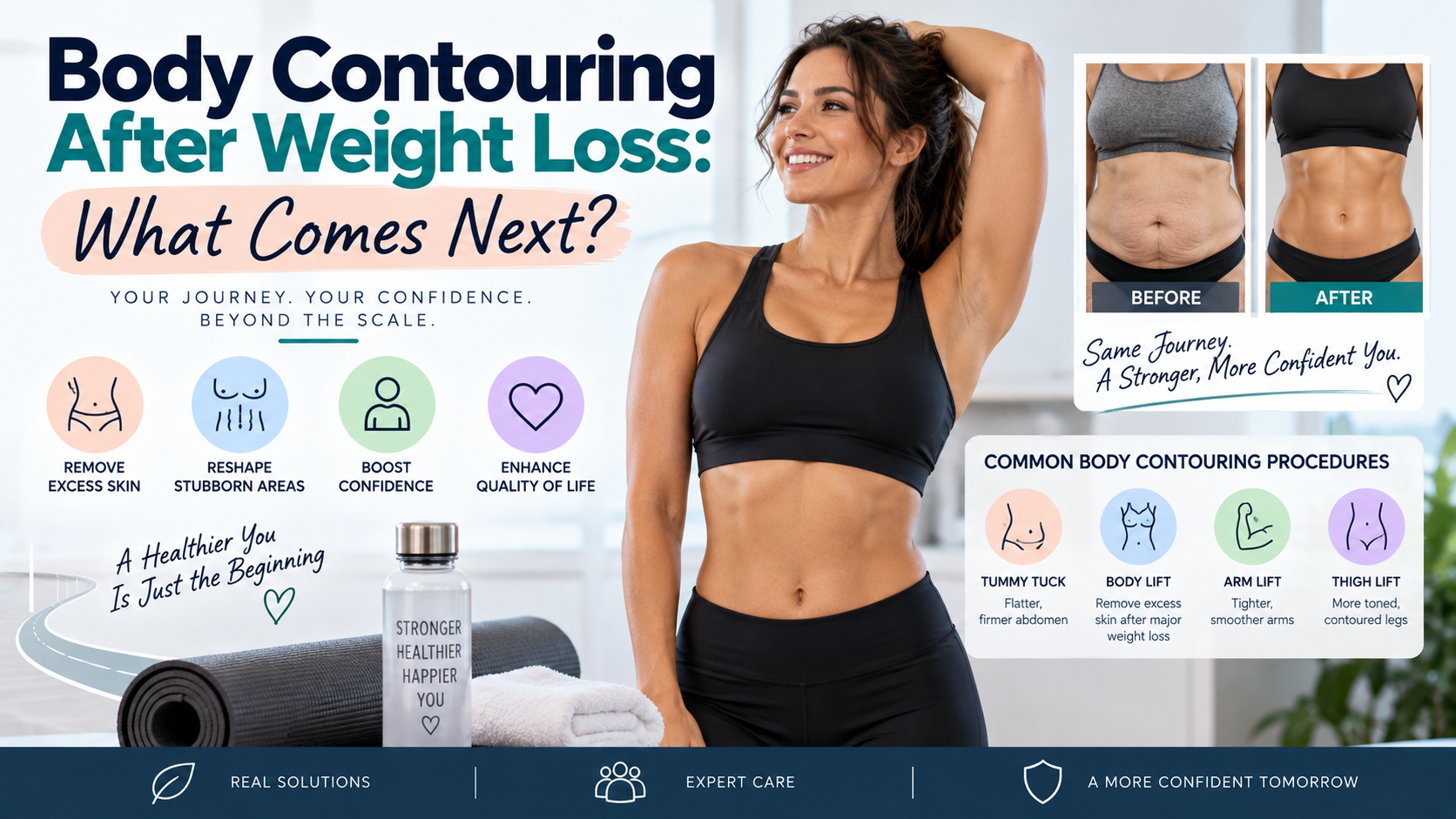
Losing a significant amount of weight is a genuine achievement, and for many people it comes with an unexpected complication. The scale reflects the work, but the mirror tells a more complicated story: loose skin that no amount of continued exercise will tighten, folds that persist regardless of body fat percentage, and a shape that does not match the effort invested. This is not a failure of discipline. It is a structural reality, and body contouring surgery exists precisely for it.
Why Skin Does Not Always Retract
Skin has elastic capacity, but that capacity has limits and diminishes with age, sun exposure, smoking history, and the magnitude and speed of weight change. When skin has been stretched substantially over years, its structural fibers are permanently altered. Once the volume beneath is gone, the skin envelope remains, and no cream, wrap, or exercise regimen restores elasticity that no longer exists.
Understanding this frees many people from a frustrating cycle of blaming themselves for something outside their control.
The Procedures That Address It
Body contouring after weight loss is a category rather than a single operation. Abdominoplasty addresses the abdomen, removing excess skin and repairing separated muscles. Body lifts address the trunk more circumferentially, treating the abdomen, flanks, and outer thighs together. Arm and thigh procedures address those areas specifically, and breast procedures restore shape lost with volume. Liposuction is frequently used alongside these to refine contours where fat remains, though on its own it does not address loose skin.
Patients researching cosmetic surgery options after major weight loss typically discover that their plan involves staging: addressing the areas that bother them most first, then proceeding over subsequent months as they recover. Attempting everything at once is usually neither safe nor advisable.
Timing and Candidacy
Surgeons generally recommend waiting until weight has been stable for a meaningful period, often six months to a year, so results are not undermined by continued change. Nutritional status matters more in this population than most, since rapid weight loss and certain bariatric procedures can affect protein and vitamin levels that healing depends on. Your surgeon may request lab work and coordinate with your bariatric team or primary physician.
Being a non-smoker is essentially non-negotiable for these procedures, given the extensive tissue work involved.
Honest Expectations About Scars
This is the conversation that matters most. Body contouring trades loose skin for scars, and those scars can be substantial. The trade is worth it for the great majority of patients, who consistently report high satisfaction, but only when they understood beforehand what they were choosing. A surgeon who shows you realistic scar photographs rather than only the most flattering results is preparing you properly.
Choosing a Surgeon for This Work
Post-weight-loss contouring is technically demanding and differs meaningfully from standard cosmetic procedures. Look for a board-certified plastic surgeon with specific experience in this population, accredited facility privileges, a portfolio showing patients with similar starting points, and a willingness to discuss staging, risks, and scars candidly.
You did the hardest part already. Body contouring is the step that lets the outside match the work, and with the right surgeon and realistic expectations, it is one of the most emotionally satisfying areas in all of plastic surgery.
