

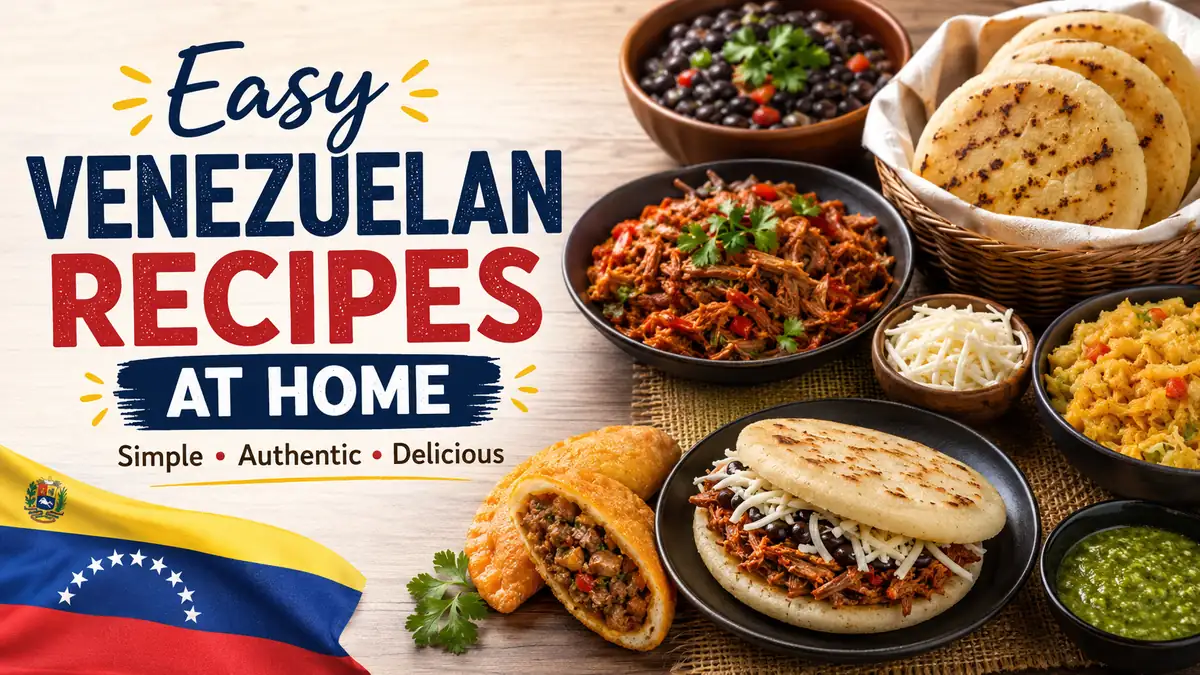
Venezuelan cooking has a useful secret for home cooks: many of its best-known dishes start with remarkably ordinary ingredients. Corn, black beans, rice, plantains, cheese, chicken, beef, avocado, eggs, and fresh vegetables can become an impressive spread without complicated restaurant techniques.
If you want to try easy venezuelan recipes at home, start with arepas, cachapas, perico, tajadas, black beans, and guasacaca. These dishes use straightforward cooking methods and form the foundation for more substantial Venezuelan favorites such as pabellón criollo, carne mechada, empanadas, tequeños, and Reina Pepiada.
This guide covers 15 dishes worth learning, from quick breakfasts to a traditional caramel custard for dessert.
Essential Ingredients for easy venezuelan recipes at home
You do not need an enormous collection of specialty ingredients to start cooking Venezuelan food. A relatively small pantry can cover several recipes.
The ingredient that deserves the most attention is pre-cooked corn flour, often called harina precocida. Harina P.A.N. is a widely recognized example. This is different from ordinary cornmeal and from masa harina used for Mexican tortillas.
That distinction matters. Pre-cooked corn flour hydrates quickly and creates the characteristic dough used for Venezuelan arepas and many corn-based empanadas.
Other useful ingredients include:
| Ingredient | Common Uses | Practical Substitute |
|---|---|---|
| Pre-cooked corn flour | Arepas, empanadas | Seek another pre-cooked corn flour rather than regular cornmeal |
| Queso de mano | Cachapas, arepas | Fresh mozzarella |
| Queso blanco | Arepas, snacks | Queso fresco or another mild white cheese |
| Black beans | Caraotas, pabellón | Canned black beans |
| Ripe plantains | Tajadas, pabellón | No close substitute; use very ripe plantains |
| Avocado | Reina Pepiada, sauces | Usually widely available |
| Ají dulce | Sofrito, beans, meats | Mild sweet pepper |
| Papelón | Drinks, desserts, sauces | Panela or dark brown sugar |
| Cilantro | Guasacaca, fillings | Fresh parsley changes the flavor but can work |
| White rice | Pabellón, everyday meals | Any fluffy long-grain white rice |
A beginner’s pantry does not need to be perfectly traditional from day one. Focus on substitutions that preserve the main texture and flavor rather than replacing every unfamiliar ingredient indiscriminately.
A note about Venezuelan food and gluten
Corn-based arepas can be naturally gluten-free when made from an appropriate corn flour, but Venezuelan cuisine as a whole is not gluten-free. Tequeños, pan de jamón, cachitos, and other baked or dough-based foods commonly contain wheat.
Check packaging when cooking for someone with celiac disease or a medically necessary gluten-free diet.
1. Venezuelan Arepas: The Best Place to Start
Arepas are one of the most recognizable foods associated with Venezuela. They are thick corn cakes with a lightly crisp exterior and tender interior.
The beauty of an arepa is its versatility. Once you understand the basic dough, the fillings can change from breakfast to dinner.
Ingredients
For about 6 medium arepas:
- 2 cups pre-cooked white corn flour
- 2½ cups warm water, approximately
- 1 teaspoon salt
- A little neutral oil for the pan
How to make arepas
- Stir the salt into the warm water.
- Gradually add the pre-cooked corn flour while mixing with your hand.
- Rest the dough for about 5 minutes so the flour can hydrate.
- Divide it into six portions.
- Roll each portion into a ball and flatten it into a thick disc.
- Smooth cracks around the edges with damp fingers.
- Cook on a lightly greased skillet over medium heat for roughly 5–7 minutes per side.
- For a drier, firmer center, finish the arepas in a hot oven for several minutes.
- Cool briefly, cut a pocket into each arepa, and add your filling.
The dough should feel moist and moldable without sticking heavily to your fingers. If it cracks dramatically, work in a little more water. If it becomes sticky and difficult to shape, add a small amount of flour.
Easy arepa filling ideas
Try:
- White cheese
- Scrambled eggs
- Black beans and cheese
- Shredded beef
- Chicken and avocado
- Ham and cheese
- Avocado and queso blanco
Quick Takeaway: If you make only one recipe from this guide, make arepas. The basic dough is inexpensive, forgiving, and useful for breakfast, lunch, or dinner.
2. Reina Pepiada Arepas
Reina Pepiada is one of the classic Venezuelan arepa fillings. Its combination of shredded chicken and avocado makes it creamy and satisfying without requiring a complicated sauce.
Ingredients
- 2 cups cooked shredded chicken
- 1 large ripe avocado
- 2–3 tablespoons mayonnaise
- 1 tablespoon finely chopped cilantro
- A squeeze of lime
- Salt and black pepper
- 4 freshly cooked arepas
Method
Mash the avocado, leaving a little texture. Fold in the chicken, mayonnaise, cilantro, lime, salt, and pepper.
Taste before adding extra mayonnaise. The avocado should provide much of the creaminess.
Open the warm arepas and spoon the chicken mixture inside.
What makes Reina Pepiada different?
Unlike plain chicken salad, avocado is central to the filling. The result should be creamy enough to hold together while still tasting fresh.
For meal preparation, make the chicken ahead but combine it with the avocado closer to serving time to reduce browning.
3. Perico: Venezuelan Scrambled Eggs
If you need a genuinely fast Venezuelan breakfast, make perico.
Perico combines eggs with sautéed tomato and onion. Versions may also contain sweet pepper, cilantro, or other seasonings.
Ingredients
- 4 eggs
- 1 small tomato, diced
- ½ small onion, finely diced
- 1 tablespoon butter or oil
- Salt and black pepper
- Chopped cilantro, optional
Method
Heat the butter or oil and gently cook the onion until softened. Add tomato and cook until some excess moisture evaporates.
Beat the eggs with salt and pepper. Pour them into the pan and scramble gently until just cooked.
Serve immediately with warm arepas, avocado, cheese, or black beans.
What actually works: Cook the vegetables before adding the eggs. Adding raw tomato directly to the eggs can release enough water to make the finished scramble soggy.
4. Cachapas with Melted Cheese
Cachapas showcase another side of corn in Venezuelan cooking.
Rather than using the firm dough associated with arepas, cachapas are thick pancakes built around sweet corn. They develop browned edges while remaining soft and slightly sweet inside.
Traditionally, they are excellent with queso de mano, whose salty richness balances the corn’s sweetness.
Ingredients
- 3 cups corn kernels, fresh or thawed
- 2 tablespoons pre-cooked corn flour or cornstarch
- 2 tablespoons milk, as needed
- 1 tablespoon sugar, optional
- ¼ teaspoon salt
- 1 tablespoon melted butter
- Queso de mano or fresh mozzarella
How to make cachapas
Blend the corn, flour, milk, sugar, salt, and butter until you have a thick batter. Do not worry about making it completely smooth; some corn texture is welcome.
Lightly butter a nonstick skillet over medium heat.
Spoon in enough batter to form a thick pancake. Cook until the bottom is golden and the top begins to set, then carefully flip it.
Add cheese to one side, fold the cachapa over, and allow the cheese to soften.
Serve hot.
5. Venezuelan Empanadas
Venezuelan empanadas commonly use a corn-based dough rather than the wheat pastry found in some other Latin American versions.
That gives them a distinct crisp exterior after frying.
Simple dough
Combine:
- 2 cups pre-cooked corn flour
- About 2½ cups water
- 1 teaspoon salt
Prepare the dough much as you would for arepas, although you want it pliable enough to press thinly.
Filling options
Use:
- Shredded beef
- Shredded chicken
- Black beans and cheese
- White cheese
- Seasoned ground beef
Place a ball of dough between sheets of plastic and flatten it into a circle. Put a modest amount of filling on one half.
Fold the circle over the filling and press or trim the edges to seal.
Fry until crisp and golden, then drain carefully.
Why do homemade empanadas split?
Three common reasons are overly dry dough, too much filling, and poorly sealed edges.
Leave a clean border around the filling and remove as much air as practical before sealing.
6. Tequeños: Venezuelan Cheese Sticks
Tequeños are especially popular as snacks and party food.
Unlike arepas and corn empanadas, traditional tequeños use a wheat-flour dough wrapped around sticks of firm white cheese before frying.
Ingredients
- 2 cups all-purpose flour
- 1 egg
- 2 tablespoons softened butter
- ½ teaspoon salt
- Approximately ½ cup water
- Firm white cheese, cut into sticks
- Oil for frying
Method
Mix the flour and salt, then work in the butter and egg. Gradually add enough water to produce a smooth, workable dough.
Rest it for about 20–30 minutes.
Roll the dough thinly and cut it into long strips. Wrap each strip spirally around a cheese stick, overlapping the dough slightly so there are no exposed gaps.
Seal the ends well.
Fry until golden and crisp.
Serve warm while the cheese is soft.
Serve tequeños with guasacaca
A fresh avocado-based sauce provides a welcome acidic contrast to fried cheese.
7. Guasacaca: Venezuelan Avocado Sauce
Guasacaca is one of the easiest additions you can make to a Venezuelan-inspired table.
Although recipes differ from household to household, common ingredients include avocado, cilantro, parsley, garlic, vinegar, oil, and peppers.
Quick guasacaca
Blend:
- 1 ripe avocado
- ½ cup cilantro
- ¼ cup parsley
- 1 small garlic clove
- 2 tablespoons vinegar
- 3 tablespoons olive or neutral oil
- A small piece of green or sweet pepper
- Salt
- A little water as needed
Blend until pourable but still substantial.
Adjust the vinegar and salt after blending.
Serve guasacaca with grilled meat, arepas, empanadas, tequeños, or roasted vegetables.
Do not think of it simply as Venezuelan guacamole. Guasacaca is generally more sauce-like and its herb-and-vinegar profile gives it a different character.
8. Caraotas Negras: Venezuelan Black Beans
Black beans, or caraotas negras, are fundamental to Venezuelan home cooking and one of the four major components of pabellón criollo.
For an easy weeknight version, canned beans save considerable time.
Ingredients
- 2 cans black beans, drained but not aggressively rinsed
- 1 small onion, diced
- ½ bell pepper, diced
- 2 garlic cloves, minced
- 1 tablespoon oil
- ½ teaspoon cumin
- Salt and black pepper
- Water or bean liquid as needed
Method
Sauté onion and pepper in oil until soft. Add garlic and cook briefly.
Add the black beans, cumin, salt, pepper, and enough liquid to keep everything loose.
Simmer for 15–20 minutes. Mash a small spoonful of beans against the side of the pot if you prefer a thicker consistency.
The beans should be flavorful enough to stand on their own rather than functioning as a bland side dish.
9. Tajadas: Sweet Fried Plantains
Tajadas prove that an excellent side dish does not need a long ingredient list.
You mainly need ripe plantains and oil.
Choosing the right plantain
This is where beginners often go wrong.
For sweet tajadas, do not choose a hard, bright-green plantain. You want a ripe plantain with yellow skin and plenty of dark spotting. Very ripe fruit gives you the characteristic sweetness and caramelized exterior.
Method
Peel the plantain and slice it diagonally into long pieces.
Heat a shallow layer of oil over medium heat. Fry the slices until deeply golden on one side, then turn them.
Drain briefly on paper towels and serve warm.
Avoid excessively high heat. Plantains contain plenty of natural sugar, so the exterior can burn before the center becomes tender.
Tajadas pair beautifully with black beans, rice, cheese, and shredded beef.
10. Carne Mechada: Venezuelan Shredded Beef
Carne mechada requires more cooking time than arepas or perico, but most of that time is gentle simmering.
It is also one of the most useful recipes to prepare in a large batch.
Ingredients
- 1½ pounds flank, skirt, or another suitable braising beef cut
- 1 onion
- 1 bell pepper
- 2 garlic cloves
- 2 tomatoes or a small amount of tomato sauce
- 1 teaspoon cumin
- Salt and black pepper
- Oil
- Water or beef stock
Method
Simmer the beef gently in water or stock until tender enough to pull apart.
Remove it, cool slightly, and shred it along the grain using two forks or your fingers.
Meanwhile, sauté diced onion and pepper until tender. Add garlic, tomato, cumin, salt, and pepper.
Return the shredded beef to the pan with enough cooking liquid to keep it juicy. Simmer until the meat absorbs the flavors.
Use carne mechada in arepas and empanadas, or save it for pabellón criollo.
Quick Takeaway: Batch cooking pays off here. One pot of carne mechada can become dinner one night, an arepa filling the next morning, and empanadas later.
11. Pabellón Criollo: Venezuela’s Iconic Complete Plate
Pabellón criollo brings several staples together on a single plate:
- Carne mechada
- Caraotas negras
- White rice
- Fried ripe plantains
Rather than being one complicated recipe, it is easier to understand pabellón as an assembly of familiar components.
The easiest home strategy
Do not start all four components simultaneously.
Make the shredded beef and black beans in advance. When it is time to eat, cook fresh white rice and fry the plantains while reheating the meat and beans.
This turns what looks like an elaborate traditional meal into manageable home cooking.
The appeal is in the contrast: savory beef, earthy beans, neutral fluffy rice, and sweet caramelized plantain all share the plate.
What is pabellón con barandas?
A familiar variation adds fried eggs to the plate. Regional and household variations exist, which is part of the character of Venezuelan cooking rather than something that needs to be “corrected” into one rigid version.
12. Asado Negro
Asado negro is a Venezuelan beef dish recognized for its dark, glossy, sweet-savory sauce.
It is less suitable for a rushed weeknight than arepas, but the technique itself is accessible.
A beef roast is browned deeply and then braised with aromatics and a sauce that develops its characteristic dark color and sweetness.
Beginner-friendly approach
Use:
- A braising beef roast
- Onion
- Garlic
- Sweet pepper
- Brown sugar or papelón
- Worcestershire sauce
- Stock
- Salt and pepper
Caramelize the sugar carefully, brown the beef, then add the aromatics and braising liquid.
Cook gently until the meat becomes tender.
Slice it and serve it with the reduced sauce.
The biggest mistake is trying to speed up the braise with aggressive heat. Slow cooking gives both the beef and sauce time to develop.
13. Papelón con Limón
After several rich dishes, papelón con limón offers something refreshingly simple.
This Venezuelan drink combines papelón—unrefined cane sugar—with citrus and water.
Ingredients
- Papelón or panela
- Water
- Fresh lime or lemon juice
- Ice
Dissolve the papelón in water, then cool the mixture.
Add fresh citrus juice to taste and serve over plenty of ice.
The exact sweetness is flexible. Start with less sweetener because you can always add more.
It works particularly well beside fried snacks such as empanadas and tequeños.
14. Quesillo: Venezuelan Caramel Custard
Quesillo is often compared with flan, but Venezuelans recognize it as a dessert with its own identity.
Its name refers to the little holes that can form in the custard, giving it an appearance somewhat reminiscent of cheese.
Ingredients
For the caramel:
- ¾ cup sugar
For the custard:
- 5 eggs
- 1 can sweetened condensed milk
- About the same volume of whole milk
- 1 teaspoon vanilla
- A little rum, optional
Method
Melt the sugar carefully in a saucepan until amber. Pour the caramel into a heatproof mold and carefully rotate the mold to coat the base.
Blend or whisk the eggs, condensed milk, whole milk, vanilla, and optional rum.
Pour the mixture over the caramel.
Place the mold inside a larger roasting dish and add hot water around it to create a water bath.
Bake until the edges are set and the center retains a slight wobble.
Cool completely, refrigerate for several hours, then invert onto a plate.
The caramel will form its own sauce.
15. Marquesa de Chocolate
If using an oven for dessert sounds like too much work, finish with marquesa de chocolate.
This chilled dessert is made by layering cookies with a rich chocolate mixture. Marie-style biscuits are a common choice.
Simple home version
You will need:
- Marie biscuits or similar plain cookies
- Milk
- Chocolate
- Butter
- Sweetened condensed milk or another suitable creamy chocolate filling
Prepare the chocolate mixture and allow it to cool enough that it will not turn the cookies into mush immediately.
Briefly dip the biscuits in milk, then arrange a layer in a dish.
Spread chocolate filling over the biscuits and repeat the layers.
Refrigerate until thoroughly chilled and set.
Marquesa is particularly useful for entertaining because it can be prepared the day before.
More Traditional Venezuelan Foods to Try Next
Once these easy venezuelan recipes at home feel comfortable, there is much more to explore.
Hallacas are among the most culturally significant dishes to learn about. They combine corn dough and an elaborate filling wrapped in plantain leaves and are strongly associated with the Christmas season. Their preparation is often a family activity rather than a quick weekday cooking project.
Pan de jamón is another Christmas favorite: a rolled bread traditionally containing ham, olives, and raisins.
You can also explore cachitos, crescent-like breads commonly filled with ham; pasticho, Venezuela’s interpretation of layered baked pasta; casabe, a cassava-based flatbread with Indigenous roots; and regional specialties such as patacón Maracucho.
These recipes are worthwhile, but they are not necessarily where a first-time Venezuelan cook should begin.
How to Build a Venezuelan Breakfast at Home
A Venezuelan-style breakfast can be as simple or substantial as you want.
For the easiest version, prepare:
- Fresh arepas.
- Perico.
- Sliced avocado.
- White cheese.
- Coffee or café con leche.
For a heartier breakfast, add caraotas negras or leftover carne mechada.
The advantage of serving several components separately is that everyone can build an arepa to suit their appetite.
An Easy Venezuelan Dinner Menu for Beginners
Trying to make five unfamiliar recipes simultaneously is an efficient way to make cooking feel harder than it actually is.
For your first Venezuelan dinner, choose one main dish, two simple accompaniments, and a make-ahead dessert.
A manageable menu is:
| Course | Dish | Why It Works |
| Starter | Tequeños + guasacaca | Can be prepared before guests arrive |
| Main | Carne mechada | Excellent for batch cooking |
| Side | Caraotas negras | Can be made ahead |
| Side | White rice + tajadas | Straightforward last-minute cooking |
| Dessert | Quesillo | Best prepared and chilled in advance |
| Drink | Papelón con limón | Quick and refreshing |
Once you become comfortable with the components, combine beef, beans, rice, and plantains into a complete pabellón criollo.
Common Mistakes When Making Venezuelan Food at Home
A few details make a surprisingly large difference.
Using ordinary cornmeal for arepas
Pre-cooked corn flour and ordinary cornmeal behave differently. Using the wrong product can leave you wondering why an otherwise simple recipe failed.
Not giving arepa dough time to hydrate
After mixing, give the dough several minutes to absorb the water before deciding whether it is too wet or dry.
Starting with unripe plantains for tajadas
Green plantains have valuable uses, but sweet tajadas need ripe fruit.
Overstuffing empanadas
A generous filling sounds appealing until it breaks through the dough during frying. Leave enough empty space to make a strong seal.
Serving dry shredded beef
Carne mechada should remain juicy. Keep some braising liquid and return it to the shredded meat as it finishes in the sofrito.
Treating every white cheese as interchangeable
Queso de mano, queso blanco, and other Venezuelan cheeses have different textures and flavors. Substitutions are perfectly practical at home, but expect them to alter the finished dish.
Assuming every traditional recipe is quick
Arepas can be made relatively quickly. Hallacas cannot.
Authenticity does not depend on forcing an elaborate celebration dish into a “30-minute meal” format.
How to Make Venezuelan Cooking Easier During the Week
The smartest approach is to prepare components, not complete meals.
On the weekend, make a pot of black beans and a batch of carne mechada. Refrigerate what you will use soon and freeze extra portions.
During the week, those two preparations can become:
- Arepa fillings
- Empanada fillings
- A pabellón criollo dinner
- Rice-and-bean bowls
- Breakfast alongside eggs
- Quick lunches with avocado and cheese
Keep pre-cooked corn flour in the pantry, ripe plantains on hand, and cilantro, avocado, onions, tomatoes, and cheese in the refrigerator.
You now have the foundation for several Venezuelan meals without starting from zero every evening.
Which Venezuelan Recipe Is Easiest for a Beginner?
Arepas are the best first recipe for most beginners.
They require only pre-cooked corn flour, water, and salt for the basic dough, and shaping imperfect arepas does not ruin them.
After arepas, try recipes in this order:
- Perico
- Guasacaca
- Tajadas
- Caraotas negras
- Cachapas
- Reina Pepiada
- Empanadas
- Tequeños
- Carne mechada
- Pabellón criollo
Leave longer projects such as asado negro, pan de jamón, and especially hallacas until you are comfortable with the cuisine.
What Makes Venezuelan Cuisine Distinctive?
Venezuelan cooking reflects a long history involving Indigenous traditions as well as Spanish and African influences.
Corn and cassava have deep roots in the region. European colonization introduced and transformed other ingredients and cooking traditions, while African influences became part of Venezuela’s broader culinary heritage.
Geography matters too. Venezuela stretches from the Caribbean coast through plains, mountains, tropical areas, and regions bordering neighboring South American countries. No single plate can represent every local cooking tradition.
What connects many familiar dishes is the skillful combination of contrasting elements: salty cheese with sweet corn, savory beef with ripe plantains, creamy avocado with crisp arepas, or earthy black beans beside fluffy rice.
That balance is what makes seemingly simple ingredients memorable.
Final Thoughts on easy venezuelan recipes at home
The easiest way to explore easy venezuelan recipes at home is not to attempt the most elaborate traditional dish first. Learn the building blocks.
Start with arepas and perico. Make cachapas when you want something sweeter. Keep caraotas negras and carne mechada ready for larger meals, then combine them with rice and tajadas for pabellón criollo. Add tequeños, empanadas, guasacaca, or Reina Pepiada as your confidence grows.
For dessert, quesillo and marquesa de chocolate show that Venezuelan comfort food extends well beyond savory corn, beans, and plantains.
A small collection of core ingredients can take you surprisingly far. Master those ingredients and techniques first, and Venezuelan home cooking becomes less like an unfamiliar cuisine and more like what it has always been: practical, generous food designed to be shared.
