

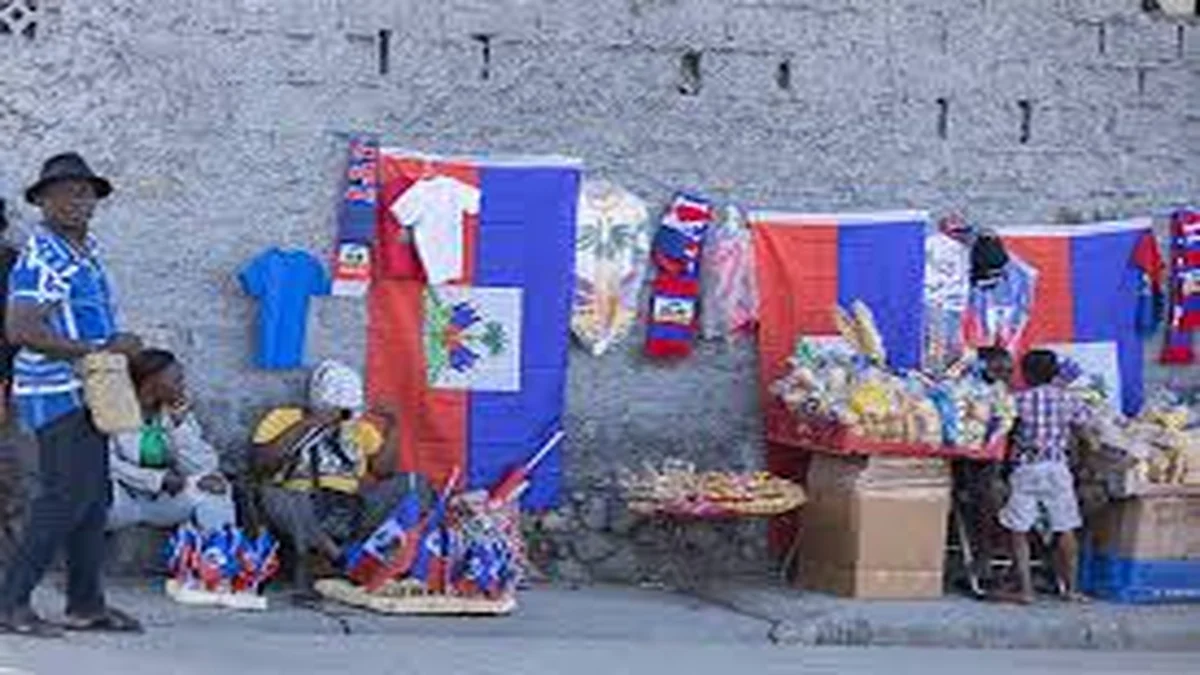
Learn ten phrases from a random list and you’ll still freeze the first time someone greets you on a Port-au-Prince street corner. Real fluency starts smaller than that — with the handful of expressions Haitians actually reach for every single day.
Common Haitian Creole phrases include “Sak pase?” (what’s up), “N ap boule” (we’re doing okay), “Mèsi” (thank you), and “Kijan ou ye?” (how are you). These greetings, courtesy phrases, and proverbs form the backbone of daily Kreyòl Ayisyen conversation, whether you’re visiting Haiti or connecting with the diaspora.
This guide walks through the greetings, courtesy expressions, daily-life phrases, proverbs, and slang that show up again and again — with plain-English meanings and notes on how and when to actually use them.
What Is Haitian Creole (Kreyòl Ayisyen)?
Haitian Creole grew out of contact between French colonists and enslaved West Africans in the 1700s. The vocabulary leans heavily French, but the grammar, rhythm, and a good portion of the idiom pulls from West African languages, with smaller traces of Spanish and Taino mixed in.
It’s not “broken French,” even though it sounds related. It’s its own language, spoken as a first language by the vast majority of Haiti’s population and used by communities across the diaspora in Miami, New York, Montreal, and beyond.
Standardization came slowly. Attempts began in the 1940s, an official orthography was settled by the late 1970s, and the language was made co-official alongside French in Haiti’s 1987 Constitution. Since 2014, the Akademi Kreyòl Ayisyen has served as the language’s regulating body, working to protect its spelling rules and formal recognition. Today more than 12 million people speak it worldwide.
That history matters for a practical reason: Creole spelling is phonetic. Once you learn the sound-to-letter rules, you can read almost anything.
Common Haitian Creole Phrases
Greetings do more work in Haitian culture than a simple “hi.” Skipping them, or rushing through them, can come across as cold.
- Bonjou — Good morning (used any time before roughly midday)
- Bonswa — Good evening (used from afternoon onward, earlier than English speakers might expect)
- Sak pase? — “What’s happening?” — the single most common casual greeting among friends and peers
- N ap boule — The standard reply to Sak pase. Literally “we’re burning,” it actually means “we’re getting by” or “we’re good”
- Kijan ou ye? / Kòman ou ye? — How are you? — more neutral and slightly more formal than Sak pase
- Orevwa — Goodbye
Quick Takeaway: use Bonjou and Bonswa with anyone older or unfamiliar, and save Sak pase for people your own age or closer relationships.
How to Ask and Answer “How Are You”
Once the greeting lands, the follow-up matters just as much.
| Question | Meaning | Typical Reply |
|---|---|---|
| Kijan ou ye? | How are you? | Mwen byen, mèsi (I’m fine, thanks) |
| Sak pase? | What’s up? | N ap boule (We’re okay) |
| Ki jan sa ye? | How’s it going? | Pa gen pwoblèm (No problem/all good) |
“Pa gen pwoblèm” deserves its own mention — Haitians use it constantly, not just to answer “how are you,” but anytime something needs a reassuring “it’s fine, don’t worry about it.”
Everyday Polite Phrases
These are the words that carry basic respect in any interaction, from a market stall to a formal introduction.
- Mèsi — Thank you
- Pa dekwa / Deryen — You’re welcome
- Tanpri — Please
- Eskize m — Excuse me / I’m sorry
- Wi / Non — Yes / No
- Mwen kontan fè konesans ou — Nice to meet you
Adding “wi” or “non” at the end of a sentence for emphasis is common in casual speech — it makes a phrase feel warmer and more conversational rather than blunt.
Useful Phrases for Daily Situations
Ordering Food and Shopping
- Konbyen sa koute? — How much does this cost?
- Mwen grangou — I’m hungry
- Bay mwen yon ti… — Give me a little… (a common, friendly way to ask for something)
- Sa gen bon gou — This tastes good
Getting Around and Asking for Help
- Ki kote…? — Where is…?
- Mwen pa konprann — I don’t understand
- Pale pi dousman, tanpri — Please speak more slowly
- M ap aprann Kreyòl — I’m learning Creole
That last one is worth memorizing on its own. Saying it out loud when a conversation moves too fast almost always gets a warmer, slower response — Haitians tend to appreciate the effort and adjust for you.
Haitian Creole Proverbs and Their Meanings
Proverbs (pwovèb) aren’t decoration in Haitian speech — they’re how people give advice, make a point, or soften criticism without being harsh about it. A conversation full of pwovèb is a conversation with someone who trusts you enough to speak plainly through them.
- Piti piti zwazo fè nich li — “Little by little, the bird builds its nest.” Used to encourage patience with anything slow-going, from learning a language to building a life.
- Kreyòl pale, kreyòl konprann — “Creole spoken, Creole understood.” Meaning: say exactly what you mean, and take it at face value — don’t overanalyze.
- Sa ki pa touye ou, li angrese ou — “What doesn’t kill you fattens you.” The Haitian cousin of “what doesn’t kill you makes you stronger.”
- Bay kou bliye, pote mak sonje — “The one who strikes forgets; the one who carries the scar remembers.” A reminder that pain lingers longer for the person who suffered it.
- Se met kò ki veye kò — “It’s the owner of the body who looks after the body.” A call to take responsibility for your own well-being — nobody else will do it for you.
Quick Takeaway: dropping even one proverb naturally into conversation signals real cultural fluency — it lands very differently than reciting vocabulary.
Haitian Creole Slang and Diaspora Expressions
This is the part most guides skip, and it’s often what diaspora kids and younger speakers actually use day to day.
- Ala fanm cho! — Roughly “what a fierce/impressive woman,” used as a compliment
- Kanpe la! — “Stand there!” / “Hold on!” — used casually to mean “wait a second”
- Oh oh! — An expression of surprise, closer to “uh oh” or “whoa”
- Se sak vre — “That’s the truth” — used to agree emphatically
- Fout! — A casual exclamation of frustration or emphasis (mild, context-dependent)
Diaspora speakers frequently mix in English or French mid-sentence — a form of code-switching that’s completely normal rather than a sign of “incorrect” Creole. If you hear a sentence blend all three languages, that’s not an error; it’s how a huge share of Haitian-American households actually talk.
Pronunciation Basics and Common Mistakes
Haitian Creole spelling is consistent once you learn a few rules:
- Every letter is pronounced — there are no silent letters the way French has them.
- “Ou” sounds like the English “oo” (as in “you”), not like the French “ou” softened further.
- Nasal vowels (an, en, on) sound similar to their French counterparts but are written more predictably.
The most common beginner mistake isn’t pronunciation — it’s tone. Learners often import French formality (vouvoiement, elaborate phrasing) into Creole, where directness is normal and not rude. Another frequent slip: treating “li” as gendered. Haitian Creole doesn’t assign grammatical gender to pronouns — “li” covers both “he” and “she,” and context does the rest.
A smaller but common mistake is skipping greetings before getting to the point. In Haitian culture, launching straight into a request without a “Bonjou” first can come across as abrupt, even if the words themselves are correct.
Bringing It All Together
None of this sticks from a single read-through. Pick five phrases — a greeting, a reply, a thank-you, one proverb — and use them out loud this week, even if it’s just to yourself. Kreyòl Ayisyen rewards that kind of small, repeated effort far more than memorizing a long list ever will.
NEED TO TRANSLATE SOMETHING RIGHT NOW? OUR FULL LANGUAGE GUIDE HUB AND TRY IT FREE.
Frequently Asked Questions
What does “Sak pase” mean in Haitian Creole?
It means “what’s up” or “what’s going on” — the most common casual greeting between friends and peers. The typical reply is “N ap boule,” meaning “we’re doing okay.”
How do you respond to “Kijan ou ye?”
Answer with “Mwen byen, mèsi” (I’m fine, thank you) or simply “Byen, mèsi.” A more casual response is “N ap boule.”
Is Haitian Creole the same as French?
No. Haitian Creole developed from French vocabulary combined with West African grammatical structures, plus some Spanish and Taino influence. It’s a distinct language, not a dialect of French, and has been co-official with French in Haiti since the 1987 Constitution.
How do you say “I love you” in Haitian Creole?
More than 12 million people speak it worldwide, including Haiti’s population and diaspora communities across North America and beyond.
What’s the difference between Bonjou and Bonswa?
Bonjou is used from morning through roughly midday; Bonswa takes over from afternoon into the evening — earlier in the day than English speakers might expect from “good evening.
