

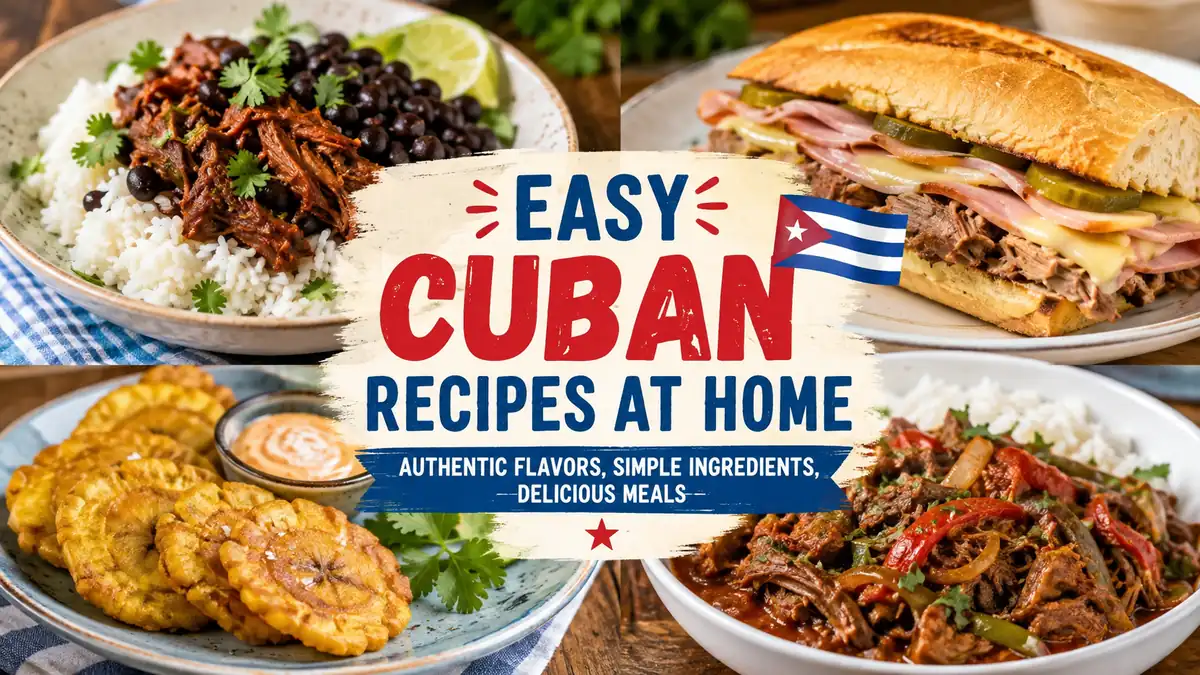
Cuban cooking can taste deeply developed without demanding complicated techniques. Start with garlic sizzling beside onions and peppers, add citrus, cumin, oregano, rice, beans, pork, chicken, or plantains, and a surprisingly ordinary collection of ingredients begins to taste like something special.
If you are searching for easy cuban recipes at home, good starting points include picadillo, Cuban black beans, arroz con pollo, tostones, maduros, yuca con mojo, mojo chicken, and a homemade Cubano. The key is learning two versatile flavor foundations—sofrito and mojo—then pairing a simple main dish with rice, beans, plantains, or yuca.
Cuban cuisine reflects generations of Spanish, African, Caribbean, and Indigenous influences. The result is food that often relies more on patient cooking, aromatics, citrus, and balanced seasoning than overwhelming heat.
Here is how to bring those flavors into an ordinary home kitchen.
What Makes easy cuban recipes at home Taste Cuban?
One useful misconception to clear up first: Cuban food is not necessarily spicy-hot.
The flavor tends to come from garlic, onion, peppers, cumin, oregano, bay leaves, citrus, olive oil, tomato, and slow-cooked meat. Rice, beans, pork, chicken, beef, root vegetables, and plantains appear repeatedly across traditional meals. Collections of Cuban recipes commonly feature ropa vieja, arroz con pollo, picadillo, black beans, pork, sandwiches, yuca, and fried plantains.
Two preparations are especially worth learning.
Sofrito: The Savory Foundation
Sofrito is an aromatic mixture used as the beginning of many Cuban dishes. Recipes vary by household, but a practical version can contain:
- 1 small onion, finely chopped
- 1 green bell pepper, finely chopped
- 3–4 garlic cloves, minced
- 2 tablespoons olive oil
- A pinch of cumin
- A pinch of oregano
Heat the oil and cook the onion and pepper until softened. Add garlic toward the end so it becomes fragrant without burning.
That simple base can go into black beans, picadillo, chicken, rice, and stews.
Mojo: The Garlic-Citrus Workhorse
Mojo provides the brighter side of Cuban cooking.
A simple homemade version combines:
- 5–6 garlic cloves
- 1/3 cup fresh citrus juice
- 1/4 cup olive oil
- 1 teaspoon dried oregano
- 1/2 teaspoon cumin
- Salt and black pepper
Traditional versions often use sour orange. If naranja agria is unavailable, combining orange juice with lime or lemon gives you the sweet-acidic balance needed for a practical home version.
Use mojo to marinate pork or chicken, spoon it over yuca, or drizzle a little over vegetables.
Quick Takeaway: Learn sofrito and mojo before worrying about dozens of individual recipes. Those two preparations give you a reusable foundation for many Cuban meals.
1. Cuban Picadillo for an Easy Weeknight Dinner
If you have never cooked Cuban food before, picadillo may be the easiest place to begin.
It is a savory ground-beef dish commonly built around onion, pepper, garlic, tomato, cumin, and other seasonings. Cuban versions frequently include olives, and some family recipes add raisins for a salty-sweet contrast.
Simple Ingredients
- 1 lb ground beef
- 1 small onion, diced
- 1/2 green bell pepper, diced
- 3 garlic cloves
- 1/2 cup tomato sauce
- 1 teaspoon cumin
- 1/2 teaspoon oregano
- 1 bay leaf
- 1/3 cup sliced green olives
- 2 tablespoons raisins, optional
- Salt and black pepper
How to Make It
- Brown the ground beef in a large skillet.
- Drain excessive fat if necessary.
- Add onion and bell pepper and cook until soft.
- Stir in garlic for about 30 seconds.
- Add tomato sauce, cumin, oregano, and bay leaf.
- Stir in olives and optional raisins.
- Simmer gently for 15–20 minutes.
Serve picadillo over fluffy white rice.
For a more complete plate, add black beans and maduros.
Picadillo is particularly convenient for meal prep because its flavor holds up well after refrigeration and reheating.
2. Cuban Black Beans: A Pantry-Friendly Classic
A pot of frijoles negros, or Cuban black beans, can turn plain rice into a proper meal.
Black beans appear throughout Cuban home cooking and are one of the most useful recipes to master because they work as both a side dish and the foundation of a meatless meal.
For an easy version, canned beans save considerable time.
Ingredients
- 2 cans black beans
- 1 small onion
- 1/2 green bell pepper
- 3 garlic cloves
- 1 tablespoon olive oil
- 1 teaspoon cumin
- 1/2 teaspoon oregano
- 1 bay leaf
- 1 tablespoon vinegar
- Salt and pepper
Cook the onion and pepper in olive oil until tender. Add garlic, followed by cumin and oregano.
Pour in the beans with some of their liquid, add the bay leaf, and simmer for roughly 15–20 minutes. Finish with a little vinegar.
Do not drain every drop of bean liquid. A little starch helps create that rich, silky texture that makes the beans cling to rice.
3. Arroz con Pollo: Chicken and Rice in One Pot
Few meals are more practical than chicken and rice cooked together.
Arroz con pollo combines seasoned chicken with rice and aromatics in one satisfying dish. It is a staple found across Latin America, with Cuban versions having their own household variations.
What You Need
- 4 chicken thighs
- 1 1/2 cups long-grain rice
- 1 small onion
- 1/2 green bell pepper
- 3 garlic cloves
- 2 tablespoons tomato sauce
- 3 cups chicken broth
- 1 teaspoon cumin
- 1 teaspoon oregano
- Pinch of saffron or annatto seasoning, optional
- 1/2 cup peas
- Salt and pepper
Season and brown the chicken first.
Remove it temporarily, cook your sofrito in the same pot, then stir in rice, tomato sauce, seasonings, and broth.
Return the chicken, cover, and simmer gently until the rice is tender and the chicken is cooked through. Add peas toward the end.
Avoid constantly stirring the rice. Leaving it alone helps prevent the grains from becoming overly sticky.
4. Mojo Chicken for a Faster Cuban-Style Meal
Mojo chicken delivers a lot of flavor for relatively little work.
The marinade does most of the heavy lifting.
Combine garlic, orange juice, lime juice, oregano, cumin, olive oil, salt, and pepper. Add boneless chicken thighs or breasts and marinate them for at least 30 minutes.
A few hours is even better.
Cook the chicken in a hot skillet until browned and cooked safely through the center.
Serve it with:
| Side | What It Adds |
|---|---|
| White rice | Mild base for the citrus juices |
| Black beans | Earthy richness |
| Maduros | Sweetness |
| Tostones | Crunch |
| Avocado salad | Freshness |
For a busy evening, mojo chicken with rice and beans is one of the most manageable easy cuban recipes at home.
5. Tostones: Crispy Twice-Fried Green Plantains
Green plantains look like oversized bananas, but they behave more like a starchy vegetable.
Tostones are made by frying slices of green plantain, flattening them, and frying them again. This twice-fried technique creates a crisp exterior with a tender center. Tostones remain a staple among Cuban sides and snacks.
How to Make Tostones
- Peel a green plantain.
- Cut it into thick rounds.
- Fry the rounds in oil until pale golden.
- Remove and drain briefly.
- Flatten each piece using a plantain press or the bottom of a sturdy glass.
- Fry again until crisp and golden.
- Salt immediately.
Serve them hot.
A garlicky mojo dipping sauce makes them even better.
Why Did My Tostones Turn Sweet?
You probably used a ripe plantain.
Tostones require green, firm plantains. Yellow or nearly black plantains contain more developed sugars and are better suited to maduros.
6. Maduros: Sweet Fried Plantains
The difference between tostones and maduros begins at the grocery store.
Tostones use green plantains.
Maduros, or fried ripe plantains, use plantains that have turned yellow with plenty of black patches. At this stage, their starch has converted into sugar, creating a naturally sweet result when fried.
Cut ripe plantains diagonally into thick slices. Fry them over medium heat until caramelized on both sides.
You do not need to add sugar.
Their natural sweetness makes maduros particularly good beside salty dishes such as picadillo, roasted pork, black beans, or chicken.
7. Yuca con Mojo: Cassava with Garlic and Citrus
Yuca—also known as cassava—is another classic starch used in Cuban cooking.
For yuca con mojo, peeled yuca is boiled until tender and served with a garlicky citrus sauce. The dish appears frequently among traditional Cuban recipe collections.
Frozen peeled yuca is convenient if handling the fresh root feels intimidating.
Simple Method
Boil yuca pieces in salted water until they are completely tender. Depending on their size, this generally takes around 20–30 minutes.
Remove any tough fibrous core.
Meanwhile, gently warm olive oil with sliced or minced garlic. Add sour-orange juice or an orange-and-lime substitute.
Pour the warm mojo over the cooked yuca and top with thinly sliced onions if desired.
The yuca absorbs the garlicky citrus dressing particularly well, so give it a few minutes before serving.
8. Ropa Vieja Made Easier at Home
Ropa vieja literally translates to “old clothes,” a reference to the shredded appearance of the beef.
It is one of Cuba’s best-known dishes: tender shredded beef cooked with peppers, onions, tomato, and seasonings.
The traditional approach requires patience because the beef must become tender enough to shred.
A slow cooker or pressure cooker simplifies the job considerably.
Home-Friendly Version
Use:
- 2 lb chuck roast or flank steak
- 1 onion
- 1 green bell pepper
- 1 red bell pepper
- 4 garlic cloves
- 1 cup crushed tomatoes
- 1 teaspoon cumin
- 1 teaspoon oregano
- 1 bay leaf
- 1 cup beef broth
- Green olives, optional
Brown the beef if time permits. Place everything in a slow cooker and cook until the meat easily separates with a fork.
Shred the beef, return it to the sauce, and allow it to absorb the cooking liquid before serving.
White rice and black beans make natural companions.
Quick Takeaway: Ropa vieja is easy in terms of technique, but it is not quick. Picadillo is the better choice when you want similar savory comfort on a weeknight.
9. Lechón Asado: Cuban-Style Roast Pork
Pork has an important place in Cuban cooking, and lechón asado showcases why mojo is such a useful marinade.
The traditional dish can involve a large cut of pork and lengthy roasting. At home, pork shoulder provides a manageable alternative.
The Marinade Matters
Combine:
- Sour-orange juice or orange and lime
- Plenty of garlic
- Oregano
- Cumin
- Olive oil
- Salt
- Black pepper
Marinate the pork for several hours; overnight works especially well.
Roast it slowly until tender.
Do not rush straight into slicing once it leaves the oven. Resting the pork lets the juices redistribute and makes the meat easier to serve.
Leftover roast pork is also exactly what you want for another famous dish: the Cuban sandwich.
10. Cuban Sandwich with Leftover Roast Pork
A classic Cubano turns leftover pork into one of Cuban cuisine’s most recognizable sandwiches.
The familiar combination includes Cuban bread, roast pork, ham, Swiss cheese, pickles, and mustard. It is then pressed until the bread becomes crisp and the cheese melts. Cuban sandwich recipes are widely represented in major Cuban-food collections.
Build It in This Order
- Slice the bread lengthwise.
- Spread mustard inside.
- Layer sliced ham.
- Add roast pork.
- Add Swiss cheese.
- Finish with sliced pickles.
- Close and press until crisp.
A sandwich press is useful but unnecessary.
A heavy skillet can do the job. Place the sandwich in one pan and press it down using another heavy pan or pot.
What If You Cannot Find Cuban Bread?
Use a soft loaf with a thin, crispable crust rather than a very dense artisan bread.
The substitution will not be identical to pan Cubano, but it gives you the right balance of crisp exterior and compressed, tender interior.
11. Moros y Cristianos: Black Beans and Rice Together
White rice served alongside black beans and Moros y Cristianos are related but distinct preparations.
For Moros y Cristianos, the beans and rice cook together, allowing the rice to absorb the bean liquid, aromatics, and seasoning.
Start with sofrito, add cooked black beans and their liquid, then stir in long-grain rice and enough additional liquid to cook the grains.
Season with cumin, oregano, bay leaf, salt, and pepper.
Cover and cook gently until the rice is tender.
This is an excellent example of why Cuban home cooking can be economical: rice, beans, aromatics, and seasonings produce a substantial side without expensive ingredients.
12. Camarones al Ajillo for a Quick Seafood Dinner
For something faster than slow-cooked beef or roast pork, make camarones al ajillo.
Shrimp cooks in minutes, while garlic provides most of the flavor.
Quick Method
Heat olive oil in a skillet and gently cook plenty of minced or sliced garlic. Add shrimp seasoned with salt and pepper.
Cook just until the shrimp turn opaque.
Finish with lime juice and chopped parsley or cilantro if you like.
The biggest mistake is leaving the shrimp in the skillet too long. Once they become firm and opaque, get them off the heat.
Serve over white rice so the grains absorb the garlicky pan juices.
13. Vaca Frita for Crispy Shredded Beef
Ropa vieja is saucy and tender.
Vaca frita takes shredded beef in a different direction.
The cooked beef is seasoned with garlic and lime, then pan-fried until parts of it become brown and crisp. Onions are commonly cooked alongside it.
This makes vaca frita especially useful if you already have cooked beef in the refrigerator.
Shred the meat well and remove excess moisture before adding it to a hot skillet. Too much liquid causes steaming instead of browning.
Let the beef sit against the hot pan long enough to develop crispy edges before moving it around.
Serve with rice, black beans, and lime wedges.
14. Flan for a Classic Cuban Dessert
After garlic, citrus, pork, and beans, a cool slice of caramel-covered flan makes a fitting finish.
Flan is a baked custard with caramel sauce. Cuban recipe collections commonly feature versions made with milk or condensed milk.
Basic Ingredients
- 1 cup sugar for caramel
- 1 can sweetened condensed milk
- 1 can evaporated milk
- 4 large eggs
- 1 teaspoon vanilla
Melt sugar carefully until amber, then pour it into the baking dish.
Blend the custard ingredients and pour them over the hardened caramel.
Bake the flan in a water bath until the edges are set while the center retains a slight wobble.
Cool completely, refrigerate, then invert onto a serving plate.
Why Use a Water Bath?
Custard prefers gentle, even heat.
The surrounding hot water moderates the oven’s heat, reducing the chance that the eggs will cook too aggressively and leave the flan rubbery or heavily cracked.
15. Café Cubano and Café con Leche
You do not have to stop at dinner.
Café Cubano is a strong, sweet Cuban-style coffee, while café con leche combines strong coffee with hot milk and is commonly enjoyed with toasted bread.
Traditionally, the characteristic sweetness of Cuban coffee comes from sugar incorporated with concentrated coffee.
For café con leche, prepare strong espresso-style coffee and combine it with warm milk according to your preferred strength.
Pair it with buttered toast for a simple Cuban-inspired breakfast.
Easy Cuban Recipes at Home: What Should Beginners Make First?
Trying to cook five unfamiliar dishes at once is the fastest way to turn an enjoyable dinner into a stressful project.
Start with three components:
Picadillo + white rice + maduros
Picadillo uses familiar ground beef and basic skillet cooking. Rice needs little intervention, while maduros require only ripe plantains and oil.
Once that feels comfortable, try:
Mojo chicken + black beans + rice
Then move to:
Ropa vieja + yuca con mojo + tostones
By this point, you will already understand sofrito, mojo, plantains, beans, rice, and slow-cooked meat—the foundations behind a large portion of Cuban home cooking.
The Cuban Pantry: Ingredients Worth Keeping Around
You do not need a cupboard filled with specialty products.
For repeated Cuban cooking, these staples cover considerable ground:
| Ingredient | Common Uses |
| Long-grain white rice | Arroz con pollo, beans and rice, side dishes |
| Black beans | Frijoles negros, Moros y Cristianos |
| Garlic | Sofrito, mojo, meats, yuca |
| Onion | Almost every savory foundation |
| Green bell pepper | Sofrito, beans, stews |
| Cumin | Beef, beans, chicken |
| Oregano | Mojo, pork, chicken |
| Bay leaves | Beans, stews, braises |
| Oranges and limes | Homemade mojo |
| Green plantains | Tostones |
| Ripe plantains | Maduros |
| Yuca | Yuca con mojo |
| Tomato sauce | Picadillo, ropa vieja |
| Green olives | Picadillo, braised dishes |
Olive oil, vinegar, salt, and black pepper fill in most of the remaining gaps.
Keeping these ingredients around means you can switch between several Cuban dishes without buying a completely new pantry for each recipe.
What Can You Substitute in Cuban Recipes?
Authenticity matters, but accessibility matters too when you are cooking dinner at home.
Some substitutions work better than others.
Sour Orange
Naranja agria can be difficult to find outside areas with strong Caribbean or Latin American grocery options.
Use fresh orange juice mixed with lime juice. Grapefruit and lime can also produce a pleasant bittersweet acidity.
Cuban Bread
A soft Italian or French-style loaf can work for a Cuban sandwich when pan Cubano is unavailable.
Avoid extremely dense, heavily crusted sourdough because it does not compress in the same way.
Fresh Yuca
Frozen peeled yuca is one of the most practical substitutions available. It eliminates peeling and tends to cook consistently.
Dried Black Beans
Canned black beans are perfectly reasonable for quick weeknight cooking.
Simmer them with fresh sofrito and seasonings rather than simply heating the can. That extra 15 minutes makes a noticeable difference.
Quick Takeaway: Substitute ingredients when availability requires it, but preserve the dish’s central flavor structure. For mojo, that means garlic + citrus + oregano. For many savory dishes, protect the onion-pepper-garlic foundation.
Common Mistakes When Cooking Cuban Food
Cuban recipes are generally approachable, but several small mistakes can flatten the finished dish.
Burning the Garlic
Garlic should smell fragrant, not bitter.
When preparing sofrito, let onion and pepper soften first, then add minced garlic toward the end.
Using the Wrong Plantain
Green plantains are starchy and suited to tostones.
Very ripe plantains are sweeter and suited to maduros.
They are not interchangeable if you want the expected texture and flavor.
Underseasoning Beans
Black beans absorb a considerable amount of flavor.
Taste them near the end and adjust salt, acid, cumin, or other seasonings gradually.
Skipping Acid
A squeeze of lime or splash of vinegar can transform a heavy dish.
Acidity is especially helpful when serving rich pork, beans, or fried foods.
Rushing Tough Cuts of Beef
Ropa vieja needs tender meat.
If the beef refuses to shred easily, it usually needs more cooking rather than more force.
Overcrowding the Pan
This matters particularly for vaca frita and other dishes where browning is the goal.
Too much food lowers the pan temperature and traps steam. Cook in batches if necessary.
How to Build a Complete Cuban-Style Meal
A useful formula is:
one protein + one starch + beans + plantains or vegetables + something acidic
For example:
| Main | Starch | Side | Fresh/Bright Element |
| Picadillo | White rice | Maduros | Avocado salad |
| Mojo chicken | Rice | Black beans | Lime |
| Ropa vieja | White rice | Tostones | Tomato-onion salad |
| Lechón asado | Yuca | Black beans | Mojo |
| Camarones al ajillo | Rice | Maduros | Citrus salad |
You do not need every component at every meal.
A bowl of rice, seasoned black beans, and maduros can already be satisfying.
Can Cuban Food Be Made Ahead?
Many Cuban dishes are excellent candidates for advance preparation.
Picadillo, black beans, ropa vieja, roast pork, and mojo can be prepared ahead, making them useful for meal planning. Long-cooked dishes often remain flavorful after reheating because their sauces and seasonings have had more time to mingle.
Rice is best refrigerated promptly and reheated thoroughly.
Tostones are different. Their appeal comes from crispness, so fry them close to serving time whenever possible.
Maduros also taste best fresh from the pan, although leftovers can be reheated.
You can make sofrito ahead and refrigerate or freeze portions. Doing that turns future Cuban dinners into much faster projects.
Are Traditional Cuban Recipes Very Spicy?
Usually not in the sense of chile heat.
Someone expecting Cuban cuisine to resemble a particularly hot salsa-based cuisine may be surprised.
The characteristic intensity more often comes from garlic, citrus, cumin, oregano, onion, peppers, tomato, and slow cooking rather than large amounts of hot peppers.
That makes Cuban dishes particularly easy to adapt for family meals. People who want heat can add hot sauce or fresh chile separately without changing the entire dish.
A Simple 3-Day Cuban Home-Cooking Plan
If you want to explore several dishes without buying an enormous ingredient list, reuse ingredients across meals.
Day 1: Mojo Chicken
Make a generous batch of mojo.
Serve the chicken with white rice, black beans, and maduros.
Save extra rice, beans, and mojo.
Day 2: Picadillo Bowls
Cook picadillo and serve it over reheated rice with the remaining beans.
Add avocado, lime, or a simple tomato-and-onion salad.
Day 3: Yuca and Leftovers
Boil yuca and spoon the remaining mojo over it.
Serve alongside leftover picadillo or chicken and fry fresh tostones if you have green plantains.
This approach is more practical than treating every Cuban dish as a completely independent recipe.
Bringing Cuban Flavor Into Your Everyday Cooking
The best way to master easy cuban recipes at home is not to memorize 30 recipes. Learn the patterns.
Start with a good sofrito. Get comfortable balancing garlic with citrus in mojo. Understand when to use green versus ripe plantains. Learn to season black beans properly and give tough meat enough time to become tender.
Then build outward.
Picadillo gives you an easy first dinner. Arroz con pollo teaches one-pot cooking. Tostones and maduros show how dramatically plantains change as they ripen. Yuca con mojo introduces another staple starch. Ropa vieja and lechón asado bring slow-cooked beef and pork into the picture, while a Cubano turns yesterday’s roast into tomorrow’s lunch.
That is one of the pleasures of Cuban home cooking: humble ingredients overlap from one dish to the next, but the meals rarely feel repetitive.
Pick one straightforward combination—picadillo, white rice, and maduros is hard to beat—and make that first. Once sofrito and mojo become familiar, the rest of these Cuban classics become much easier to bring to your own table.
