

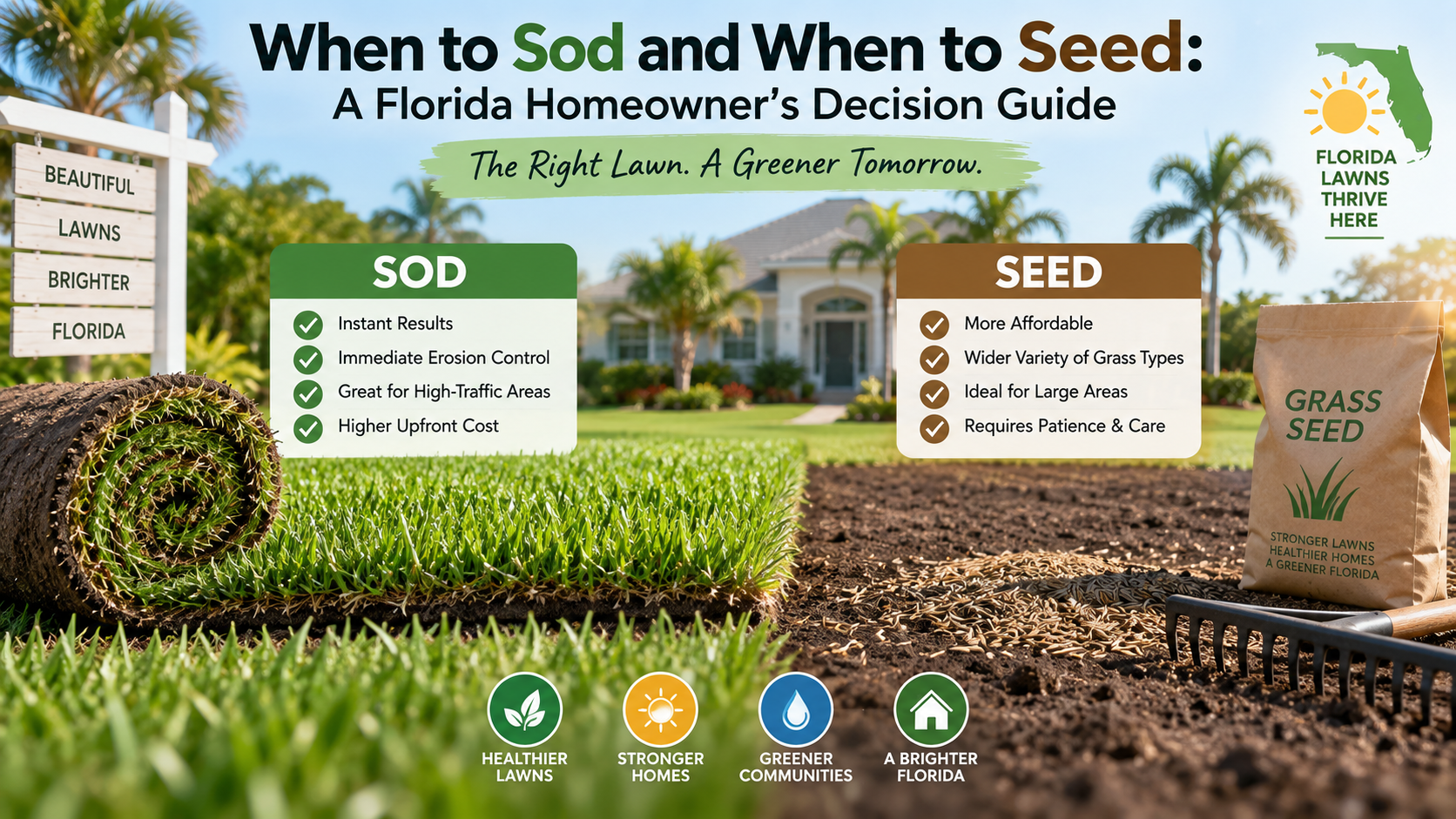
Every homeowner facing a bare or failing lawn confronts the same fork in the road: lay sod for an instant lawn, or seed and wait. In much of the country this is a genuine debate with reasonable arguments on both sides. In Florida, the answer is more clear-cut than most people realize, and understanding why saves both money and a season of disappointment.
Why Seeding Struggles in Florida
The most popular Florida lawn grasses simply do not cooperate with seed. St. Augustine, the region’s dominant turf, is not commercially available as seed at all and must be established vegetatively, from sod or plugs. Zoysia seed exists but germinates slowly and unevenly, often taking a full season to fill in while weeds exploit every gap. Only Bahia and certain Bermuda varieties seed reasonably well, and even those demand consistent moisture during germination, precisely when Florida’s sun and sandy soils work against you.
Add the weed pressure of a subtropical climate, where opportunistic species colonize bare soil within days, and seeding becomes a project requiring months of vigilance rather than a shortcut.
What Sod Delivers Immediately
Sod solves the problem in an afternoon. A mature grass system with established roots arrives, gets installed, and begins knitting into the soil within two weeks. That instant coverage does more than look good: it shades the soil against weed germination, holds soil against erosion during summer downpours, and eliminates the mud-and-dust phase entirely.
For homeowners, the practical benefits stack up quickly. There is no fencing off the yard for two months, no repeated reseeding of thin patches, and no watching weeds win the race. Buying wholesale sod directly from a farm keeps the cost per square foot far lower than retail garden centers, which brings whole-lawn projects within reach for many households that assumed sod was a luxury option.
The Honest Cost Comparison
Seed costs less upfront, and that is where the advantage ends for most Florida projects. Factor in the additional water during an extended germination period, the weed control for bare soil, the reseeding of failed areas, and the delayed use of your own yard, and the gap narrows considerably. For the grasses most Florida homeowners actually want, the comparison never arises, since seed is not an option at all.
Timing Your Project
Sod can be installed year-round in Florida, though establishment is fastest during the warm growing season when the grasses are actively rooting. The genuine constraints are practical: reliable irrigation for the first two weeks and avoiding installation during hard freezes in northern parts of the state. Coordinating delivery with your installation day matters more than the calendar month, since fresh-cut sod roots dramatically better than pallets that have been sitting.
Making the Call
For nearly every Florida residential lawn, sod is the practical answer. It works with the grasses that thrive here, defeats weed pressure by design, and delivers a usable lawn immediately rather than eventually. Source it fresh from a farm, prepare the soil properly, and water it faithfully for the first two weeks. Do that, and the instant lawn becomes a lasting one, which is the whole point of the investment.
