

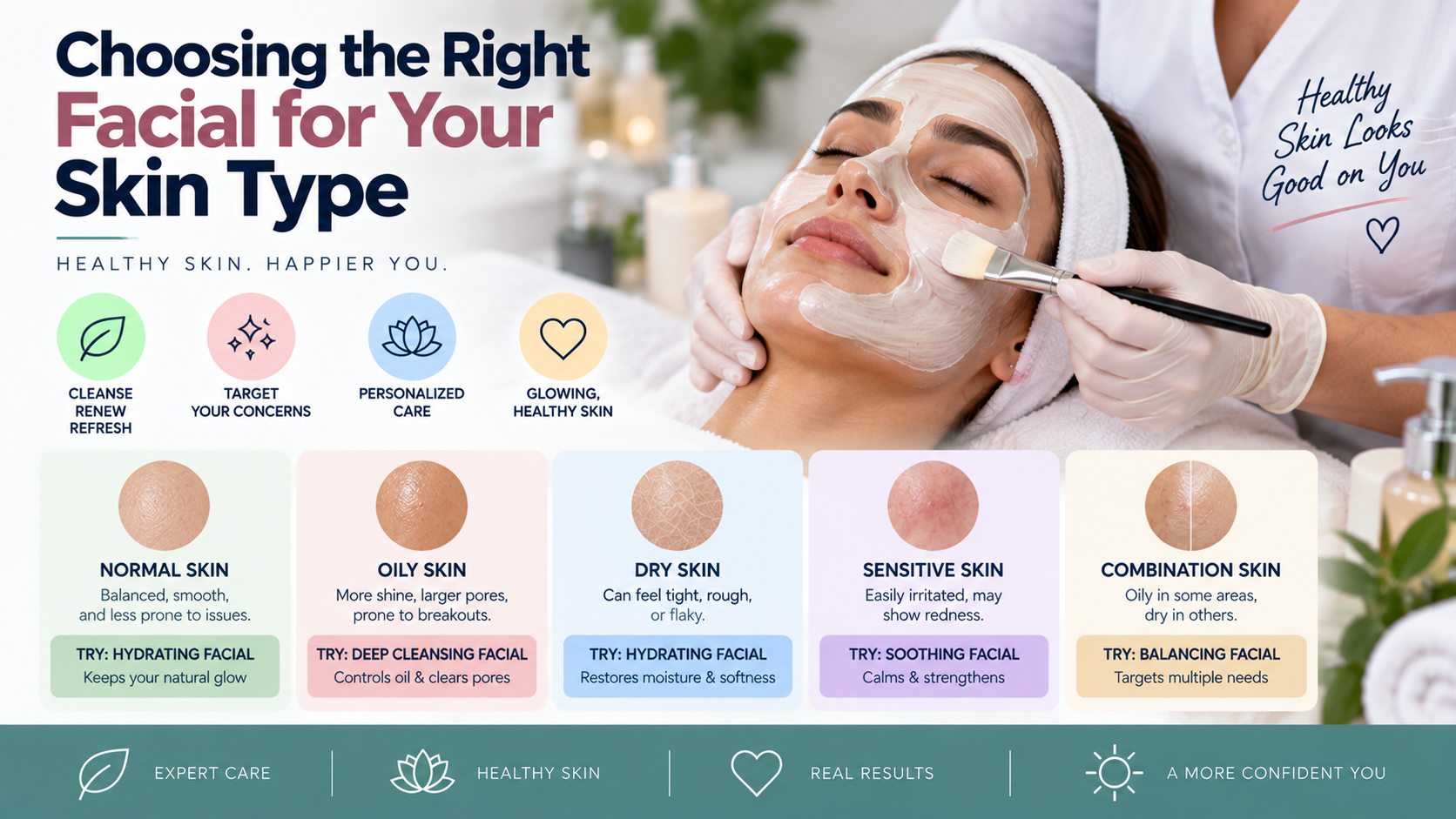
Facial menus can be genuinely confusing. Hydrating, clarifying, brightening, anti-aging, enzyme, oxygen, dermaplaning: the names suggest meaningful differences without explaining them, and most people end up choosing based on which description sounds nicest rather than which treatment their skin actually needs. A little understanding turns that guesswork into a decision, and the results improve accordingly.
Start by Identifying Your Skin
Most people misidentify their own skin type, usually because they are treating a temporary condition as a permanent characteristic. Oily skin produces excess sebum consistently, typically with visible pores and a tendency toward congestion. Dry skin lacks oil and often feels tight or flaky. Dehydrated skin lacks water, which is different, and can occur alongside oiliness, producing skin that feels oily and tight simultaneously. Combination skin varies by zone, and sensitive skin reacts easily to products, temperature, or friction.
The distinction between dry and dehydrated matters most, because the treatments differ and mistaking one for the other is why many people feel their facials never quite work.
Matching Treatment to Type
Oily and congestion-prone skin generally benefits from deep-cleansing treatments with thorough extractions and clarifying ingredients, along with exfoliation that keeps pores clear without stripping. Dry skin responds to nourishing treatments with richer emollients and gentle exfoliation. Dehydrated skin needs hydration-focused work, often with hyaluronic acid, regardless of how oily it feels.
Sensitive skin calls for calming, minimal-ingredient treatments and an esthetician willing to skip aggressive steps. Mature skin often benefits from treatments emphasizing circulation, gentle resurfacing, and ingredients supporting firmness. Combination skin frequently receives zone-specific treatment within a single session, which is one advantage of a skilled esthetician over a fixed protocol.
Practices offering facials Safety Harbor clients return to typically begin every appointment with a genuine skin analysis rather than defaulting to whichever treatment was booked online, since what your skin needs today may differ from what it needed last season.
Frequency Matters More Than Intensity
The most common mistake is treating facials as occasional events. Skin renews on multi-week cycles, and consistent treatment every four to six weeks produces cumulative improvement that sporadic appointments never achieve. A monthly rhythm also lets your esthetician track how your skin responds and adjust.
What a Good Facial Includes
Beyond the products, expect cleansing, analysis under proper lighting, exfoliation appropriate to your skin, extractions when needed, a treatment mask or serum phase, massage that supports circulation and relaxation, and finishing products including sun protection. You should leave with specific guidance about home care rather than a sales pitch.
Communicate to Get Value
Tell your esthetician what your skin has been doing recently, what products you use, what medications or treatments you have started, and what bothers you most. That information changes what they choose, and the difference between a generic facial and a targeted one is largely a matter of what you shared in the first five minutes.
Choose based on your skin rather than the menu description, go regularly rather than occasionally, and speak up during the appointment. Those three habits turn facials from a pleasant hour into genuine skin maintenance.
